
Architecture has always been a delicate balance: realizing a creative vision while ensuring the fundamental safety and stability of the structure. Buildings must withstand gravity, wind, earthquakes, and the wear and tear of time. Traditionally, this relies on established engineering principles, iterative analysis, and the hard-won experience of architects and engineers. But what if we could teach an AI to design structures with inherent stability, learning from virtual trials just like humans learn from experience, but millions of times faster?
This is where the fascinating intersection of Artificial Intelligence (AI), specifically Reinforcement Learning (RL), and architectural design comes into play.
The AI Apprentice: Learning Through Rewards
Imagine an AI agent tasked with designing a building component or even a whole structure. Reinforcement Learning provides a framework for this AI to learn through trial and error [30]. The agent proposes a design (takes an action), and then it receives feedback in the form of a "reward" based on how well that design performs in a simulated environment. The AI's goal is simple: maximize its cumulative reward over time [30]. It learns by experimenting, figuring out which design choices lead to better outcomes.
The Ultimate Reward: Staying Standing
Now, consider the core idea: What if the primary reward we give the AI is based on the building's ability to stay standing?
This isn't just a binary pass/fail. The reward function – the crucial component that guides the AI's learning [31] – could be incredibly sophisticated. It could incorporate:
- Structural Integrity: How well does the design resist collapse under simulated gravity and load? [34, 35]
- Resilience to Forces: How does it perform under simulated high winds or seismic activity? Designs that remain stable get higher rewards [8, 25].
- Material Efficiency: Does it achieve stability without excessive material use (penalizing wasteful designs)? [4, 35]
- Serviceability: Does it meet deflection and vibration limits? [34]
Essentially, we're tasking the AI with discovering design principles that lead to inherent structural robustness by rewarding it directly for that outcome.
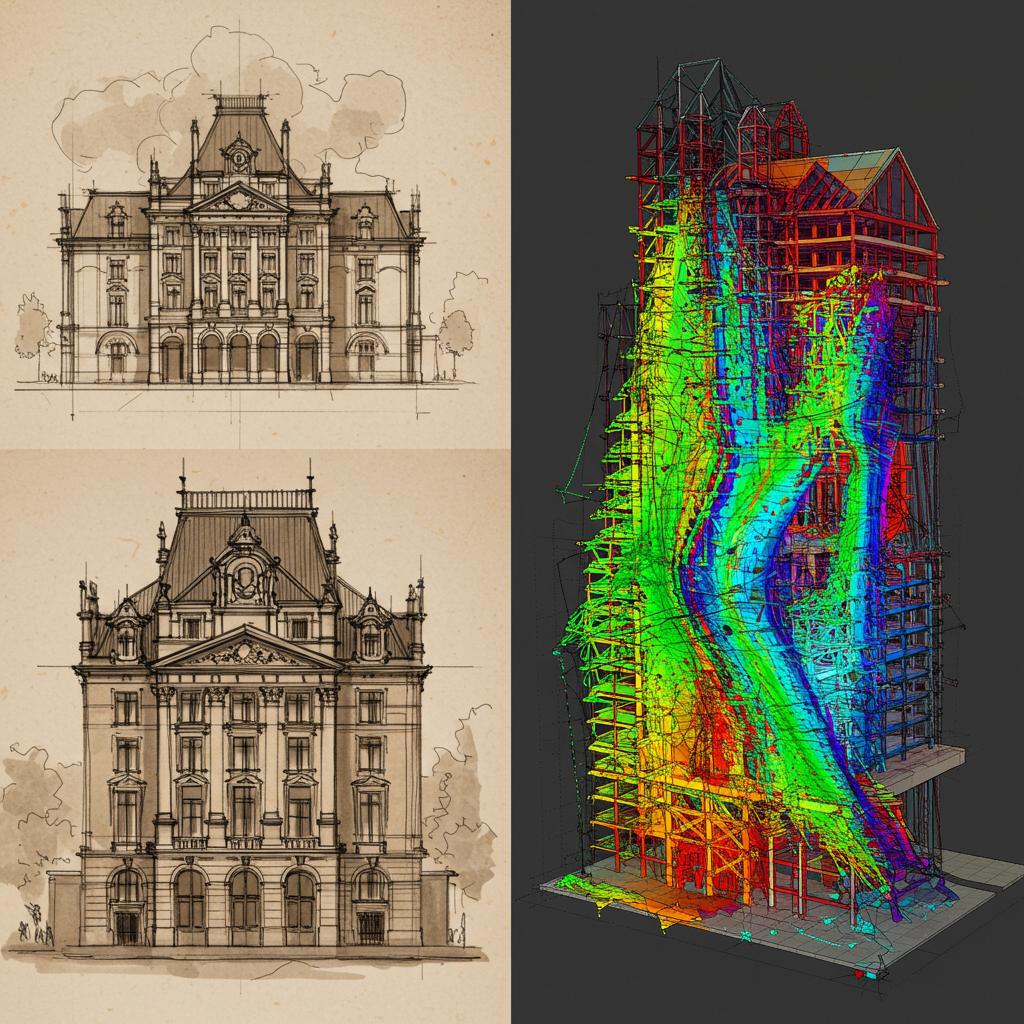
Beyond Stability: Simulating the Real World
But a building isn't just about standing; it's about performing well for its occupants and the environment. The simulations used to test the AI's designs and inform the reward function can encompass a much wider range of physics-based factors [8]:
- Physical Forces: Detailed simulations of wind flow (using tools like Orbital Stack's AI Wind Streamlines [24]) and seismic response [25, 27].
- Internal Conditions: Analysis of natural light penetration (daylighting), thermal comfort, temperature distribution, and acoustics [8, 5, 22].
- Energy Performance: Simulating heating, cooling, and lighting needs to optimize for energy efficiency [1, 28, 2].
These simulations create a rich, virtual environment where the AI doesn't just learn to prevent collapse, but to optimize the design across multiple, often competing, performance criteria simultaneously.
The Power of Physics: Introducing PIDRL
A purely data-driven AI might learn correlations that aren't physically sound or might struggle to generalize to new situations. This is especially risky in safety-critical applications like structural engineering. Enter Physics-Informed Machine Learning (PIML) [40] and its application in RL: Physics-Informed Deep Reinforcement Learning (PIDRL) [42].
PIDRL systematically integrates known physical laws and engineering principles directly into the AI's learning process [40]. This isn't just about simulating physics; it's about baking physics into the AI's "brain." This can happen in several ways [42, 34, 35]:
- Physics-Informed Environment: The simulation the AI interacts with is governed by physical equations.
- Physics-Informed Model Structure: The AI's internal neural networks can be structured to respect physical laws (like conservation of energy).
- Physics-Informed Loss/Reward: The AI is explicitly penalized during training for violating physical principles or rewarded for adhering to them.
This physical grounding makes the AI more data-efficient (it needs less training data because it already "knows" physics), more robust, and crucially, more trustworthy [40]. It ensures the AI learns solutions that are not just optimal according to the data, but also physically plausible and safe.
A concrete example is the FrameRL framework, which uses PIDRL to automate the design of steel frame structures, integrating Finite Element Method (FEM) analysis into the learning loop and using a physics-informed reward to promote safe and economical designs [35].
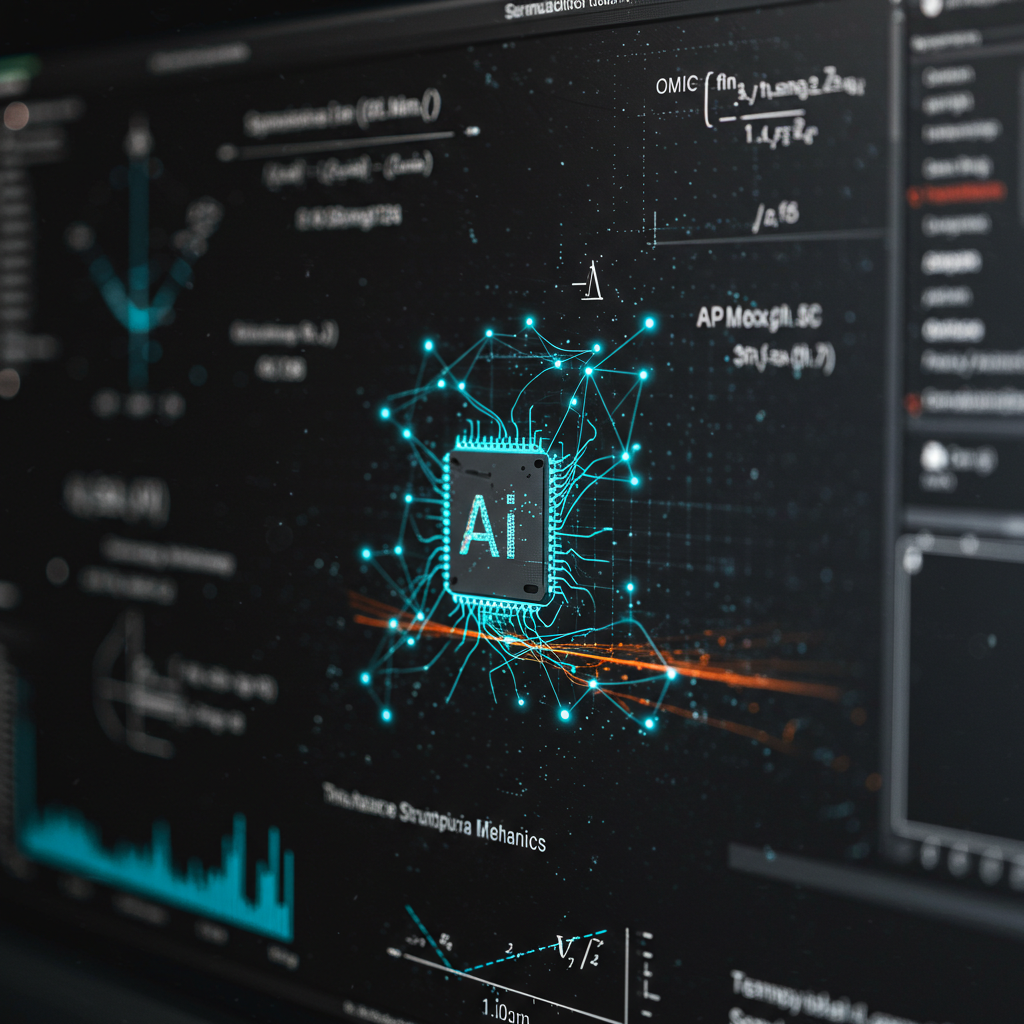
The Future is Collaborative and Physics-Aware
The road to fully autonomous, physics-aware AI structural designers has challenges. Designing effective reward functions is complex [31, E], requiring deep collaboration between AI experts and structural engineers. Integrating these tools seamlessly into workflows takes time [6].
However, the potential is immense. PIDRL offers a path towards AI that can:
- Rapidly explore vast design spaces to find novel, highly optimized, and structurally sound solutions [2, 34].
- Perform complex structural assessments informed by multiple physical simulations far earlier in the design process [24, D].
- Potentially learn strategies to actively enhance building stability or prevent collapse during extreme events.
This isn't about replacing architects or engineers, but augmenting their capabilities. The future likely involves a powerful synergy: human designers setting the vision, constraints, and ethical considerations, while AI, grounded in physics, explores possibilities and optimizes for performance and safety at a scale previously unimaginable [VIII.D].
By teaching AI the fundamental laws that govern our physical world and rewarding it for respecting them, we can unlock a new era of architectural innovation – creating buildings that are not only inspiring but also inherently more resilient and robust.

References:
- [1] A Review of Artificial Intelligence in Enhancing Architectural Design ..., MDPI
- [2] Beyond Imagery: The Application of AI to Architectural Design ..., SmithGroup
- [4] 31 AI Tools for Architectural Design; 2025 Ultimate Guide - Neuroject
- [5] AI in Architecture: Trends, Tips, and Examples in 2025 - gb&d magazine
- [6] AI in Architecture: Transforming the Way We Build, Design and Live, HashStudioz
- [8] Architectural Simulation | Enhance Designs with Real-World Insights, Autodesk
- [22] The Emergence of Artificial Intelligence in Architectural Design: An In-Depth Exploration, JAS Boutique
- [24] Introducing 3D Wind Streamlines for AI: Revolutionize Early Design ..., Orbital Stack
- [25] (PDF) A real‐time seismic damage prediction framework based on machine learning for earthquake early warning - ResearchGate
- [27] The automated collapse data constructor technique and the data-driven methodology for seismic collapse risk assessment - ResearchGate
- [28] (PDF) Sustainable AI Applications in Building Energy Management ..., ResearchGate
- [30] Reinforcement-Learning-Based Path Planning: A Reward Function Strategy - MDPI
- [31] Comprehensive Overview of Reward Engineering and Shaping in Advancing Reinforcement Learning Applications - arXiv
- [34] Full article: A novel reinforcement learning-based method for ..., Taylor & Francis Online
- [35] A physics-informed deep reinforcement learning framework for ..., ResearchGate
- [40] Physics-Informed Machine Learning for Modeling and Control of Dynamical Systems, ResearchGate
- [42] arxiv.org (PIDRL for Building Energy Control)
- [VIII.D] Section VIII.D from the provided research document (Human-AI Collaboration)
- [E] Section VII.E from the provided research document (Reward Design Crux for Structural Apps)
- [D] Section III.D from the provided research document (Simulation Shifting Left)